Lobotomies. You may be surprised (or not, if you’re like me—chronically online) that this once-popular yet now-banned psychiatric procedure has become a punchline on TikTok and other social media platforms. Throughout the 20th century, lobotomies were hailed as an “all-in-one” cure for various psychiatric disorders. Today, with the immense progress in neuroscience and psychiatric treatment, the idea that severing connections in the prefrontal cortex was once considered a legitimate solution seems preposterous to many young people. However, what often goes unnoticed is the historical link between lobotomies and Electroconvulsive Therapy (ECT)—a connection that has contributed to the unwarranted stigma surrounding ECT, despite its modern safety and efficacy.
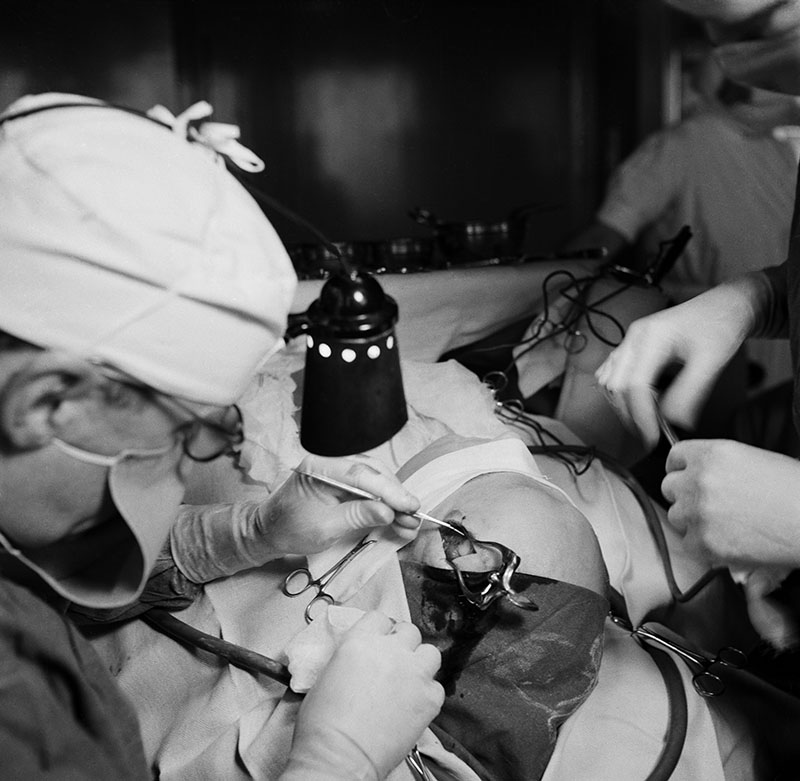
The first frontal lobotomy was performed in 1935 by Portuguese neurologist António Egas Moniz. However, it wasn’t until American neurologist Walter J. Freeman and neurosurgeon James W. Watts championed the procedure that lobotomies gained traction in the United States. The initial method involved drilling a hole in the skull, inserting a leucotome (a surgical tool designed by Moniz), and severing connections between the frontal lobes and the thalamus. Moniz reported that his first 20 patients showed improvement, with some able to return home from psychiatric institutions. Encouraged by these early successes, Freeman and Watts performed thousands of lobotomies throughout the mid-20th century, often without fully understanding the long-term consequences.
At this point, you may be wondering—where does ECT fit into this history? The answer lies in the infamous transorbital lobotomy, also known as the “Icepick Lobotomy,” which Freeman developed to be faster and more accessible. Unlike the original method, this procedure involved inserting an instrument through the eye socket to sever brain connections. Crucially, Freeman used ECT to induce seizures and unconsciousness in patients prior to the lobotomy, intertwining the two practices in the public’s perception.
To understand how this association contributed to ECT’s stigma, it’s essential to explore its actual origins and purpose. In 1934, Hungarian neuropsychiatrist Ladislas J. Meduna observed that patients with epilepsy had higher concentrations of microglia—cells that play a crucial role in maintaining brain health by clearing debris and protecting neurons. Meduna hypothesized that inducing controlled seizures with alternating low electric currents could stimulate neuroprotective effects and alleviate psychiatric symptoms. This principle led to the development of ECT as a treatment for conditions like severe depression, schizophrenia, and bipolar disorder.
However, prior to the 1950s and 60s, ECT was administered without general anesthesia, meaning patients experienced the full force of seizure-related physical effects. While local anesthetics were sometimes used during transorbital lobotomies, the lack of anesthesia in early ECT sessions contributed to its traumatic reputation. Media portrayals further conflated the two procedures, and by the 1970s, with the rise of less invasive treatments such as psychiatric medications, both lobotomies and ECT were widely vilified. Unfortunately, while lobotomies were rightfully abandoned as unethical, ECT—despite its continued refinement and proven benefits—remains clouded in stigma.
Today, ECT is a safe and effective treatment for individuals with treatment-resistant depression, bipolar disorder, schizophrenia, and severe anxiety. Yet, the word “seizure” still evokes fear, and misconceptions about the procedure persist. As we work toward breaking the stigma surrounding mental health, ECT must be part of that conversation, offering hope to those for whom other treatments have failed.
So, the next time you scroll past a comment saying “Lobotomy-core,” take a moment to remember the true history behind the term—and the countless individuals affected by past medical malpractice.
Yours Truly,
Syd
Yours truly,
Syd
References:
Afkhami, A. A., Fatollahi, J. J., Peace, M. A., & Yadgar, R. J. (2022). Spinning lobotomy: A conventional content analysis of articles by the pioneers of the procedure in the United States. SSM – Mental Health, 2, 100123. https://doi.org/10.1016/j.ssmmh.2022.100123
American Psychiatric Association. (2019). What is electroconvulsive therapy (ECT)? Psychiatry.org; American Psychiatric Association. https://www.psychiatry.org/patients-families/ect
Chen, S., Bluhm, R., Achtyes, E. D., McCright, A. M., & Cabrera, L. Y. (2023). Looking through the lens of stigma: Understanding and anticipating concerns about the responsible development and use of psychiatric electroceutical interventions (PEIs). SSM – Mental Health, 4, 100261–100261. https://doi.org/10.1016/j.ssmmh.2023.100261
Suleman, R. (2020). A brief history of electroconvulsive therapy. American Journal of Psychiatry Residents’ Journal, 16(1), 6–6. https://doi.org/10.1176/appi.ajp-rj.2020.160103




 < ourhumanalgorithm >
Leave a comment